
How much should your emergency fund be
Updated
An emergency fund is usually three to six months of essential expenses: housing, utilities, groceries, insurance, transport and minimum debt payments. If those add up to $2,800 a month, the target is $8,400 to $16,800. Aim for six months or more when your income is irregular or one income supports the household.
Count essential expenses only
Use what you would still have to pay if your income stopped: housing, utilities, groceries, insurance, transport, childcare and minimum payments. Leave out eating out, travel and savings contributions. Your last three months of statements give you a real number.
Three months or six
- Closer to three months: stable salary, two incomes, few dependants, other savings you could reach.
- Six months or more: freelance or commission income, a single income for a family, a specialised job that takes long to replace, or a home and car that are older.
Worked example
| Line | Amount |
|---|---|
| Essential expenses per month | $2,800 |
| Three-month target | $8,400 |
| Six-month target | $16,800 |
| Saving $500 a month, months to reach three months | 17 |
| Saving $500 a month, months to reach six months | 34 |
Example figures show the method only.
Where to keep it
Keep it in a separate, insured savings account you can reach within a day or two. It should not swing with the stock market, because emergencies often arrive at the same time as a downturn. A separate account also makes it less tempting to spend.
Build it in stages
- Save one month of essentials first.
- Pay down high-interest card debt while keeping that month in place.
- Continue to three months, then six if your situation calls for it.
- After using it, refill it before other saving goals.
Track it in Fullgrove
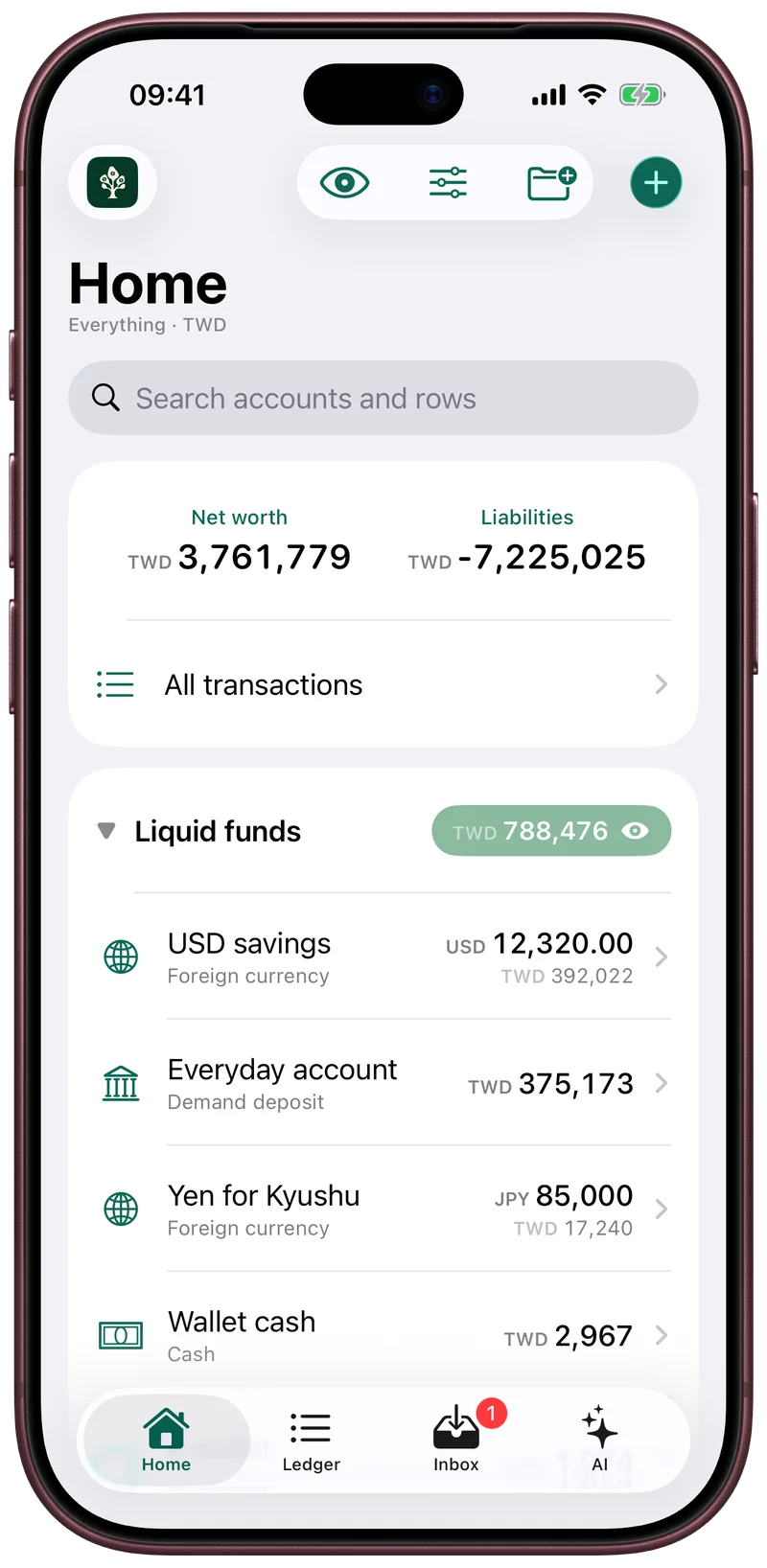
Create a goal with the target amount and a date. The goal shows how much is saved, and how much is still needed each month to arrive on time. You can set aside the accounts that hold it, and the Liquid funds group on Home adds up cash in every currency you hold.
Calculate your emergency fund target
- Add up one month of essential expenses from your recent statements.
- Choose three months for stable income or six or more for irregular income.
- Multiply the monthly essentials by that number.
- Divide the gap by what you can save each month to get a timeline.