
How to make a budget
Updated
To make a budget, write down your monthly take-home pay, list your fixed bills, plan flexible spending from what you actually spent last month, set aside savings and debt payments, and check your pace once a week. Every dollar of take-home pay gets a job before the month starts.
Step 1: Start from take-home pay
Use the amount that lands in your account after tax and payroll deductions. If your income varies, use your lowest month from the past year, and treat anything above it as extra.
Step 2: List your fixed bills
Rent or mortgage, utilities, phone, insurance, loan minimums and subscriptions. These change little from month to month, so they are the easiest part to get right. Look at a full year of statements to catch bills that come quarterly or yearly, and divide those by twelve.
Step 3: Plan flexible spending from real numbers
Groceries, eating out, transport and personal spending are where budgets break. Set each one from what you really spent over the last three months, and trim from there. A number based on your own history is one you can keep.
Step 4: Pay savings and debt first
Move money to savings, and any extra debt payment, on payday. What is left is what you can spend. If you have no emergency fund yet, build one before you invest; see how much it should be.
Step 5: Check the pace every week
A budget is a plan, and a weekly check shows whether the month is on track while there is still time to adjust. If one category runs over, move money from another one and write down why. Rework the plan after three months.
Worked example
| Line | Monthly |
|---|---|
| Take-home pay | $4,200 |
| Rent | $1,450 |
| Utilities and phone | $180 |
| Insurance | $160 |
| Groceries | $520 |
| Eating out | $220 |
| Transport | $180 |
| Subscriptions | $45 |
| Personal and fun | $250 |
| Savings | $700 |
| Extra debt payment | $300 |
| Buffer for surprises | $195 |
| Left to assign | $0 |
Example figures show the method only.
Keeping it in Fullgrove
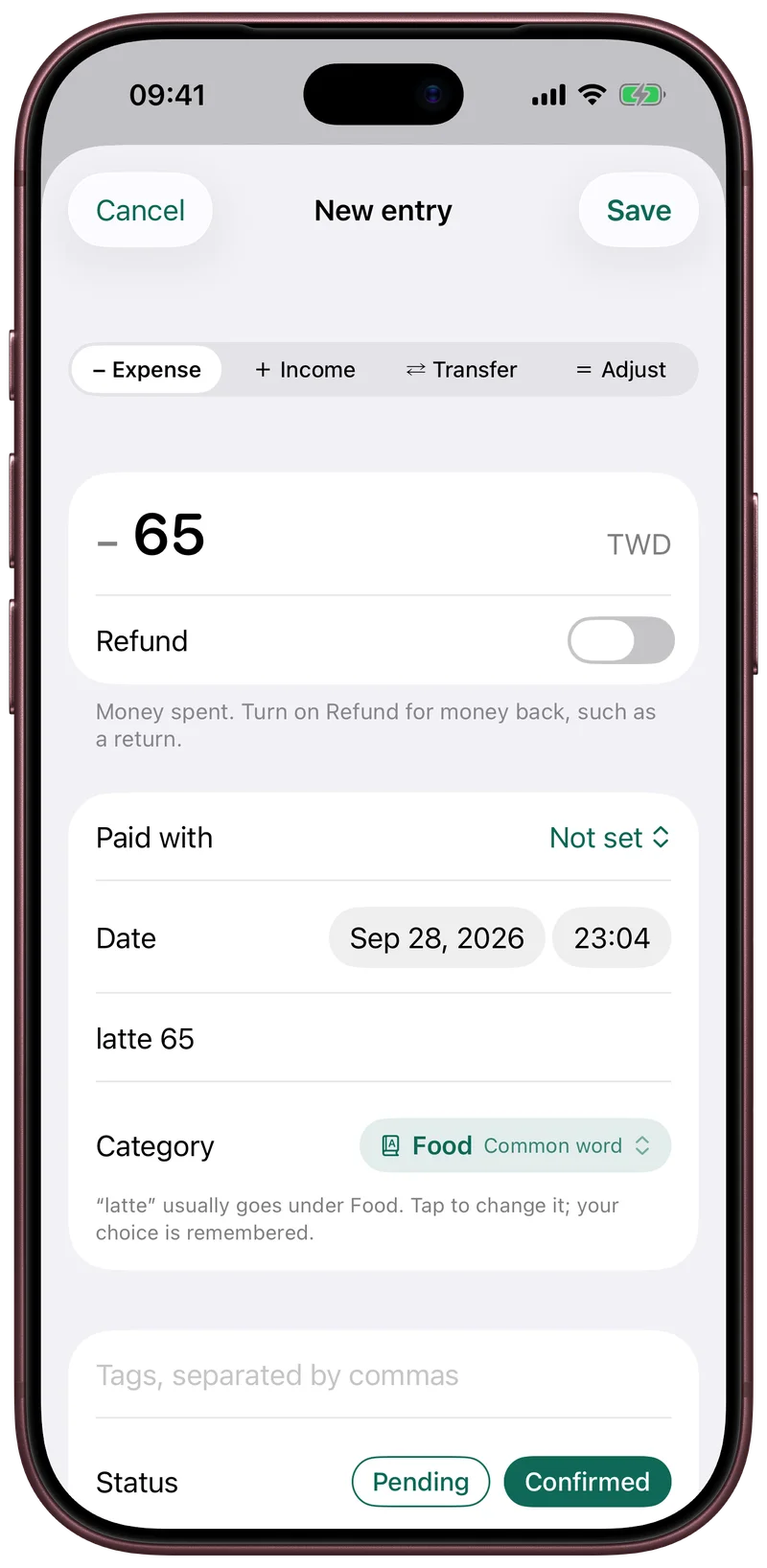
Fullgrove suggests a budget for each category from the median of your last three months, and adds nothing until you tap Add. Each budget shows how much you would have spent by today at an even pace and an estimate for month end. Spending arrives from card statements, receipts and Apple Pay taps, and a typed line like “groceries 58” is filed as you type, so the weekly check takes a minute.
Make a monthly budget
- Write down your monthly take-home pay.
- List fixed bills, including yearly ones divided by twelve.
- Set flexible categories from the last three months of real spending.
- Assign savings and extra debt payments, then a small buffer, until nothing is left to assign.
- Check your pace every week and adjust categories when one runs over.