
Sinking funds for yearly bills
Updated
A sinking fund is money you put aside each month for a bill you already know is coming, such as insurance, a vehicle registration or a yearly subscription. Divide the bill by the number of months until it is due and treat the result as a monthly cost. A $1,200 premium due in twelve months is $100 a month. When the bill arrives, it has already been counted.
Which bills belong in a sinking fund
- Insurance premiums paid once or twice a year.
- Vehicle registration, tax and inspection.
- Property tax and home insurance, where they are not paid with the mortgage.
- Yearly subscriptions and memberships.
- Tuition and school fees.
- Gifts and travel that come at the same time each year.
A cost nobody could schedule, such as a medical bill or an urgent repair, belongs to the emergency fund.
Work out the monthly amount
| Bill | Amount | Due in | Per month |
|---|---|---|---|
| Car insurance | $1,200 | 12 months | $100 |
| Vehicle registration | $180 | 6 months | $30 |
| Home insurance | $960 | 8 months | $120 |
| Yearly subscriptions | $240 | 12 months | $20 |
| Total | $270 |
After a bill is paid, start again with the months until the next one.
Example figures show the method only.
Find the bills you forgot
Read twelve months of card and bank statements and mark anything that appears once or twice a year. Renewals charged to a card are the easiest to miss, because no paper bill comes first.
Where to keep the money
It can stay in your everyday or savings account. The point is to count it as spoken for, so that it stops looking like money to spend.
Sinking funds in Fullgrove
- Set aside holds an amount for a named bill over a period, for example a year of home insurance. The money does not move. One share of the amount counts against the budget each month. Choose the account it is kept in, and that account shows the amount as set aside. A payment of exactly that amount marks it paid. It is on the Budgets page of Reports.
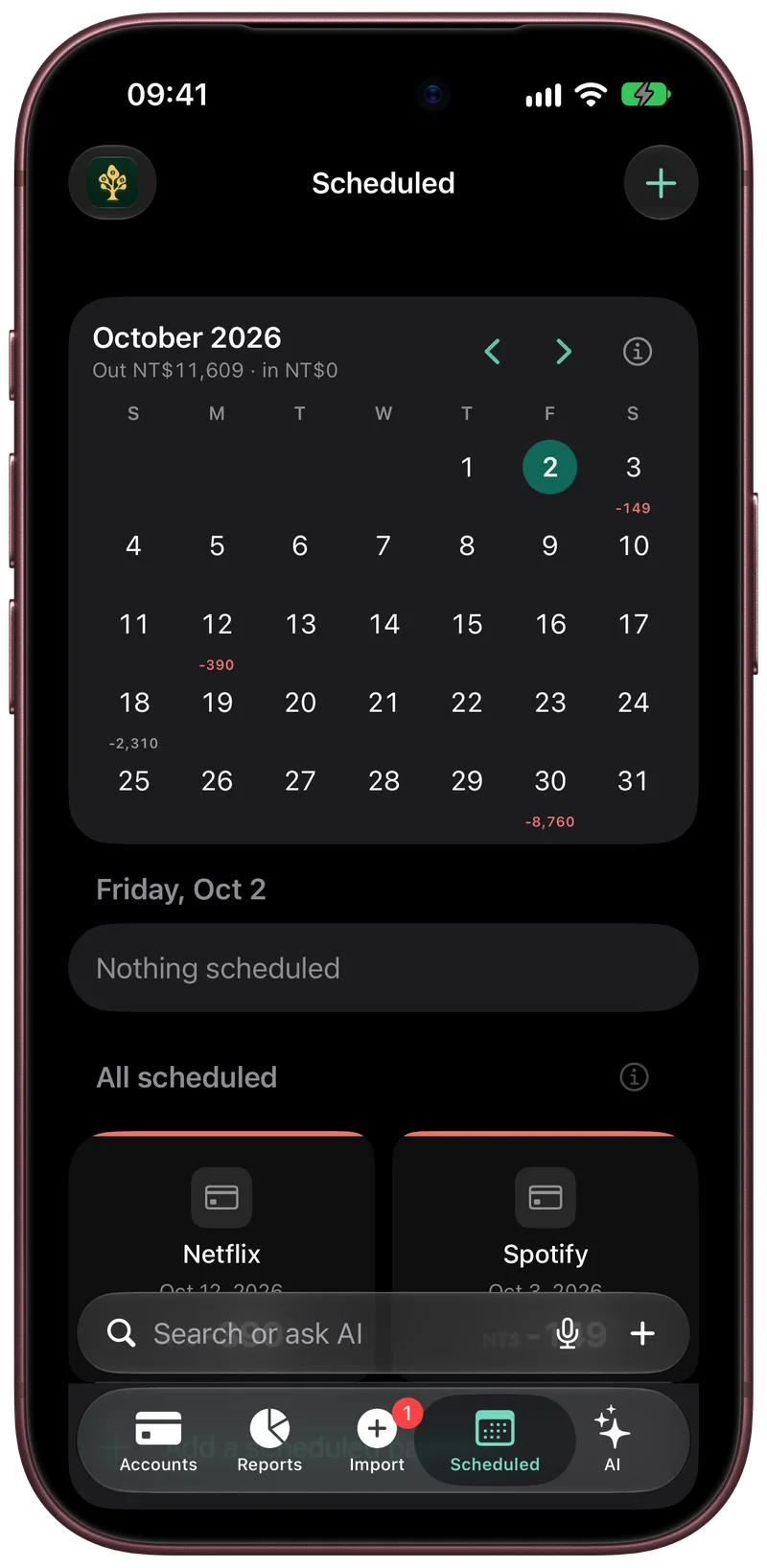
- Scheduled shows rent, subscriptions and card bills on a month calendar. A payment can repeat monthly, weekly or yearly, with a reminder at 9:00 the day before or on the day.
- Looks regular suggests a payment that Fullgrove found repeating in your own entries.
- On the Accounts tab, the second line, Coming up, adds what is due in the next 30 days and names the next bill.
- For a ledger whose region is Taiwan, Scheduled also lists yearly duties, such as the vehicle licence tax and the house tax, from three months ahead.
Fullgrove records and reminds. It moves no money and pays no bill.
Set up a sinking fund
- List every bill that comes once or twice a year, with its amount and due date.
- Divide each amount by the months left until it is due.
- Add the monthly amounts and include the total in your budget.
- In Fullgrove, open Reports, go to Budgets, tap Set an amount aside, and enter the name, the amount and the period.
- When the bill is paid, set the next period.